
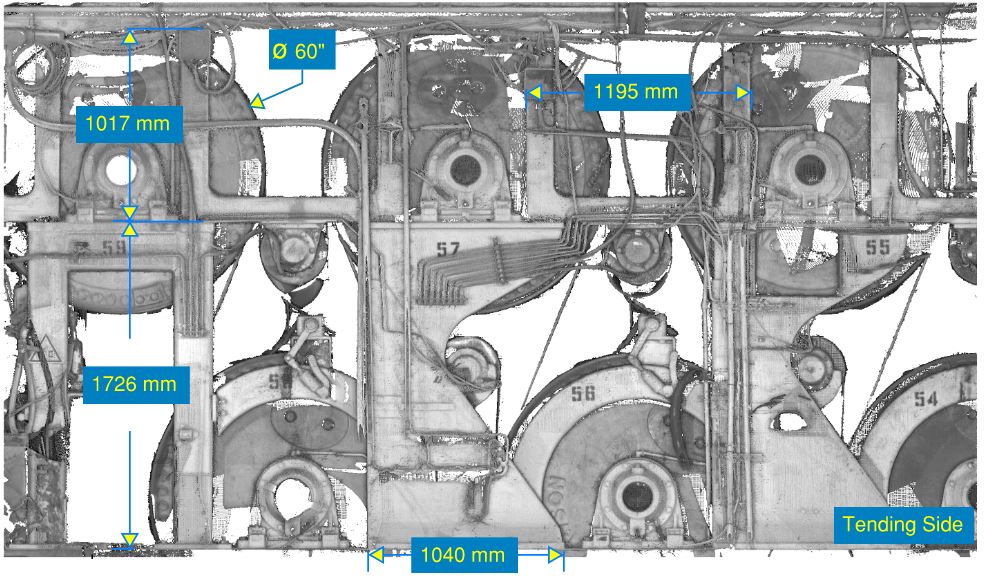
3D modelling utilises laser scanning data by converting millions of precise measurement points into accurate digital models. Laser scanners capture detailed point cloud data of physical objects and spaces, which specialised software then processes into usable 3D models. This technology enables industries to create digital twins, support design processes, and manage assets with exceptional accuracy and efficiency.
What is laser scanning data and how does it create 3D models?
Laser scanning data consists of millions of precise measurement points captured when laser scanners emit light pulses that bounce back from surfaces. The scanner records the exact distance, angle, and position of each point, creating what professionals call a point cloud – a digital representation of physical space.
The technology behind laser scanners works by measuring the time it takes for laser pulses to return to the device. Modern laser scanners can capture thousands of points per second, building up incredibly detailed datasets that represent every surface, edge, and feature of the scanned environment.
This point cloud data forms the foundation for 3D model creation. Each point contains precise coordinate information that, when combined with millions of other points, creates a comprehensive digital fingerprint of the physical world. The density of these points determines the accuracy and level of detail of the resulting 3D models.
Reality capture through laser scanning provides the raw material that software applications transform into workable 3D models. The scanning process captures not just the obvious surfaces but also complex geometries, hidden details, and spatial relationships that would be difficult or impossible to measure using traditional methods.
How does point cloud data get transformed into accurate 3D models?
Point cloud data transformation follows a systematic workflow that begins with data cleaning and registration, then progresses through meshing and model optimisation. Professional software processes the raw scan data to remove noise, align multiple scans, and create coherent 3D models suitable for various applications.
The process starts with data cleaning, where technicians remove unwanted points such as dust particles, moving objects, or scanning artefacts. This ensures the final model represents only the permanent features of the scanned environment.
Registration comes next, aligning multiple scan positions into a single coordinate system. Since complex projects often require scanning from multiple locations, this step ensures all data fits together perfectly. The software identifies common reference points between scans and mathematically aligns them.
Meshing transforms the point cloud into solid surfaces by connecting adjacent points with triangular faces. This creates the familiar 3D model appearance that design software can manipulate. The mesh density affects both model accuracy and file size, requiring careful balance based on the intended use.
Model optimisation refines the mesh for specific applications. Industrial laser scanning projects might require different optimisation than architectural work. The software can simplify complex areas, enhance important features, or prepare models for integration with CAD systems and BIM workflows.
What are the main benefits of using laser scanning for 3D modelling projects?
Laser scanning delivers superior accuracy, significant time savings, and enhanced safety compared to traditional measurement methods. Projects benefit from millimetre-precision data capture, reduced site visits, and the ability to work in hazardous environments without putting personnel at risk.
Accuracy represents the most compelling advantage. Laser scanning technology captures measurements with precision levels that manual methods cannot match. This accuracy proves particularly valuable for construction industry laser scanning projects, where precise dimensions are critical for successful construction and renovation work.
Time efficiency transforms project timelines. A single scanning session captures comprehensive data that would require weeks of traditional surveying. Teams can complete detailed facility documentation in hours rather than days, allowing projects to progress more quickly.
Safety improvements protect personnel and reduce liability. Scanning eliminates the need for workers to access dangerous areas such as active industrial facilities, high structures, or unstable environments. The technology captures complete data remotely, keeping teams safe while gathering comprehensive information.
Cost-effectiveness emerges through reduced labour requirements and fewer site visits. While the initial investment in scanning technology is significant, the efficiency gains and accuracy improvements typically provide strong returns, especially for complex industrial and infrastructure projects.
Which industries benefit most from laser scanning-based 3D modelling?
Manufacturing, construction, infrastructure, and facility management sectors gain the most value from laser scanning-based 3D modelling. These industries require precise spatial data for planning, optimisation, and asset management, making the technology particularly valuable for their operations.
Manufacturing industries use the technology for facility layout optimisation, equipment planning, and reverse engineering applications. Laser scanning and reality capture enable manufacturers to create accurate digital representations of production facilities, supporting efficient space utilisation and equipment installation projects.
Construction and architecture rely heavily on scanning for building information modelling (BIM) and renovation projects. The technology provides accurate as-built documentation, clash detection capabilities, and precise measurements for design development. Complex renovation projects particularly benefit from the comprehensive data that scanning provides.
Infrastructure management organisations use scanning for asset documentation and maintenance planning. Transportation authorities, utility companies, and facility owners create digital twins that support long-term asset management strategies and operational decision-making.
Process industries benefit from laser scanning for investment projects for plant expansions, equipment upgrades, and safety improvements. The technology enables accurate planning of complex industrial modifications while maintaining operations and ensuring regulatory compliance.
Understanding how laser scanning transforms into 3D models helps organisations make informed decisions about implementing this technology. The combination of precision, efficiency, and safety makes it an increasingly important tool for industries requiring accurate spatial data. We specialise in digital measurement and modelling services that help organisations harness the full potential of laser scanning technology for their specific applications and requirements. For more information about how this technology can benefit your project, you can request a detailed quote to explore the possibilities.