
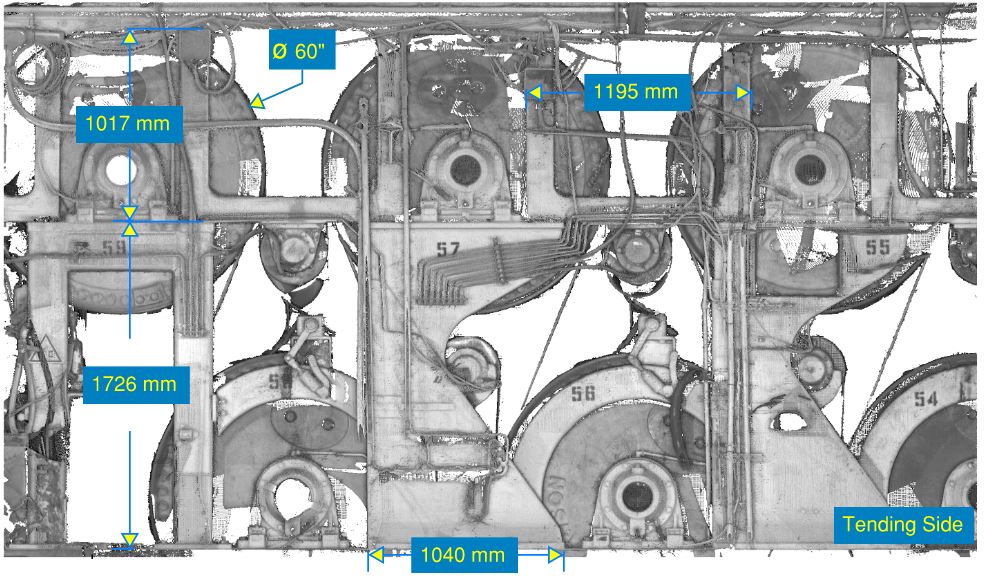
Laser scanning supports facility modernization by capturing precise 3D measurements of existing structures and converting them into detailed digital models. This technology creates accurate point cloud data that helps engineers and architects understand current facility conditions before planning upgrades. The resulting digital twins enable better decision-making, reduce costly errors, and streamline the entire modernization process from planning to implementation.
What is laser scanning and how does it work in facility projects?
Laser scanning is a technology that uses laser beams to capture millions of precise 3D measurements of physical structures within minutes. The scanner emits laser pulses that bounce back from surfaces, calculating exact distances to create detailed point cloud data representing every aspect of a facility’s geometry and spatial relationships.
In facility projects, laser scanning operates by systematically measuring spaces from multiple positions to ensure complete coverage. The scanner rotates 360 degrees, capturing data points that form a comprehensive digital representation of walls, pipes, equipment, and structural elements. This process, known as reality capture, transforms physical spaces into digital format with millimetre-level accuracy.
The point cloud data generated serves as the foundation for all modernization planning activities. Engineers can examine existing conditions remotely, identify potential conflicts before they occur, and develop renovation strategies based on actual measurements rather than outdated drawings or assumptions.
Why do modernization projects need accurate facility measurements?
Modernization projects require accurate measurements because precise data prevents costly errors during planning and construction phases. When facility upgrades are based on assumptions or outdated documentation, projects often encounter unexpected obstacles that lead to delays, budget overruns, and design changes that could have been avoided.
Industrial laser scanning provides the detailed measurements needed for informed decision-making throughout the modernization process. Project teams can visualize existing conditions accurately, plan new installations with confidence, and coordinate different trades more effectively when everyone works from the same precise digital model.
The visualization capabilities of laser scanning data help stakeholders understand complex facility layouts and identify optimization opportunities that might not be apparent from traditional 2D drawings. This comprehensive understanding leads to better planning decisions and more successful project outcomes.
How does laser scanning create digital twins for facility management?
Digital twins are created by processing laser scanning point cloud data into intelligent 3D models that represent both the physical facility and its operational characteristics. The transformation begins with the raw scan data, which is cleaned, aligned, and converted into detailed geometric models that serve as the digital foundation.
These digital replicas provide facility managers with a complete virtual representation of their physical assets. The models can be updated as modifications are made, creating a living document that supports ongoing facility management decisions, maintenance planning, and future modernization efforts.
Construction industry laser scanning enables facility managers to conduct virtual inspections, plan maintenance activities, and train personnel using the digital twin model. This approach reduces the need for physical site visits while improving understanding of complex facility systems and their relationships.
What types of facilities benefit most from laser scanning during modernization?
Industrial facilities and manufacturing plants gain the most value from laser scanning technology during modernization efforts. These complex environments often contain intricate piping systems, heavy machinery, and structural elements that are difficult to measure accurately using traditional methods.
Process industry facilities particularly benefit because their dense, multi-level layouts require precise coordination between existing equipment and new installations. Laser scanning and reality capture technology can document these complex environments comprehensively, enabling better planning for equipment upgrades, process improvements, and safety enhancements.
Construction and infrastructure projects also see significant advantages when existing buildings undergo renovation or expansion. The technology helps architects and engineers understand existing structural conditions, identify potential conflicts with proposed designs, and develop more accurate construction documentation.
How do you integrate laser scanning data into modernization planning?
Integration begins by incorporating point cloud data directly into design software used by architects and engineers. The 3D measurements serve as the base layer for all design work, ensuring that new elements are planned with full awareness of existing conditions and spatial constraints.
Collaboration becomes more effective when all project stakeholders work from the same accurate digital model. Laser scanning data can be shared across different software platforms, enabling seamless coordination between architectural, engineering, and construction teams throughout the modernization process.
Project optimization occurs when teams use the digital models to test different design scenarios, identify the most efficient installation sequences, and minimize disruption to ongoing facility operations. This approach, supported by comprehensive laser scanning services, leads to better project outcomes and more successful facility modernization efforts.
Facility modernization projects achieve better results when supported by accurate laser scanning data and digital twin technology. The combination of precise measurements, comprehensive documentation, and advanced visualization capabilities enables more informed decision-making throughout the modernization process. We help organizations transform their physical facilities into detailed digital models that support both current modernization efforts and future facility management needs. Get in touch for modernization support.