
Accurate models from Laser Scan Data
3D modeling
At N1digital, we specialize in creating accurate and reliable 3D models by harnessing the power of advanced laser scanning technology.
Intelligent 3D modeling
Why choose n1Digital?
Unmatched precision
Ensures millimeter-level accuracy through laser scanning and total station data.
Customized workflows
Delivers tailor-made models for BIM, CAD, or VR/AR integration.
Meticulous Quality
Employs rigorous checks at every stage to guarantee reliable deliverables.
Multidisciplinary Versatility
Adapts seamlessly for architecture, engineering, construction, and more.
Accurate and reliable 3D models
3D modeling with Laser Scan technology
Our process transforms raw scan data into detailed digital representations tailored to meet the diverse needs of industries such as architecture, engineering, construction, and manufacturing. Laser scanning captures millions of data points, providing a precise depiction of real-world environments. N1digital takes this raw scan data and converts it into high-quality 3D models that reflect every detail with unparalleled accuracy. Whether you’re managing a retrofit project, designing new infrastructure, or conducting a site analysis, our models serve as the perfect foundation for informed decision-making.
What Sets Our 3D Models Apart?
Precision
Our models maintain millimeter-level accuracy, ensuring the smallest details are captured.
Customization
Comprehensive Quality Control
Every model undergoes a meticulous quality control process to ensure consistency, accuracy, and reliability. Our experts rigorously review each model to meet the highest industry standards. Additionally, we incorporate comprehensive total station measurements as part of our quality control, providing a further layer of precision and verification.
Versatility
Our Process
Laser Scanning
High-resolution scans capture every aspect of your site or object with precision.
Total Station Measurements
Data Processing
Model Development
Quality Assurance
Delivery
The final model is delivered in the format of your choice, ready for immediate use in your applications.
Applications of our 3D models
Industrial retrofits and upgrades
Architectural and structural designs
Construction planning and monitoring
Facility management and maintenance
Digital twin creation for real-time monitoring
3D modeling
Geometric 3D models
As-built geometric models, or as-built 3D representations, are digital models that precisely capture the actual geometry of constructed structures or facilities after a project is completed. These models accurately reflect the physical conditions on-site, documenting dimensions, shapes, and spatial relationships with minimal deviation. They verify that construction aligns with the original design intent by comparing as-built models to design plans, highlighting discrepancies.
As-built models serve as detailed records of completed projects, including any changes made during construction, and are invaluable for facilities management by identifying the locations of equipment and infrastructure to streamline maintenance and modifications. They integrate seamlessly with Building Information Modeling (BIM) platforms, enhancing collaboration and supporting future renovations.
Created using technologies like laser scanning and photogrammetry, as-built models enable comparisons with original designs to assess construction quality and identify areas for improvement. They also demonstrate compliance with regulations and safety standards, ensuring adherence to approved designs. Provided as part of project handover documentation, these models support ongoing maintenance, future expansions, and lifecycle management of the built environment, making them essential tools in modern construction practices.
As-built models in retrofit and investment projects
As-built models are vital for retrofit and investment projects, offering detailed, accurate representations of existing structures, facilities, or systems. They provide a reliable foundation for planning and execution by enabling assessments of current conditions to identify areas requiring upgrades or modifications. These models serve as references for design and feasibility studies, allowing engineers to overlay proposed changes and ensure seamless integration with existing infrastructure.
By facilitating spatial coordination, they help prevent clashes and interferences during retrofits. Accurate representations of existing conditions improve cost estimation, material sourcing, and compliance with regulatory standards. Engineers can also use these models for simulations to assess the impact of proposed changes on performance, including structural integrity and energy efficiency.
As-built models enhance communication among stakeholders by providing clear visualizations of plans and outcomes. They can be updated during projects for real-time progress tracking and ensure alignment with planned modifications. Once completed, these models become part of the documentation, serving as references for future maintenance, upgrades, or investments. In essence, they support every stage of retrofit and investment projects, from initial assessments to ongoing management.
Intelligent 3D models
Intelligent 3D models find applications in various industries, such as manufacturing, engineering, architecture, and construction. They improve the design process, enhance product performance, reduce errors, and support data-driven decision-making throughout the entire lifecycle of a project or product.
Intelligent 3D models incorporate parametric geometry, where parameters and relationships define and update the design automatically, enabling seamless modifications. Associative relationships ensure linked components adjust consistently to changes. These models simulate real-world behaviors, like response to forces or thermal changes, and include metadata, such as material properties and costs, enhancing their utility. They are interoperable across CAD, CAE, BIM, and other tools, supporting advanced analysis, simulation, and optimization. Automation and generative design streamline processes, creating optimized iterations. Collaboration is improved through visualization and interaction, fostering efficient decision-making among teams.
Intelligent 3D models greatly enhance process and manufacturing plants by offering advanced capabilities beyond traditional designs. They enable detailed and efficient planning through parametric modeling, allowing engineers to optimize layouts and simulate scenarios. Embedded behavioral properties support simulations like stress tests and fluid dynamics, ensuring better performance evaluation.
These models integrate seamlessly with various software platforms, facilitating collaboration and data exchange across disciplines. Virtual commissioning minimizes risks by validating operations before implementation, while detailed metadata aids maintenance by providing essential equipment and service information. Intelligent 3D models also form the foundation for digital twins, enabling real-time monitoring, predictive maintenance, and optimization.
They improve safety through risk assessment simulations, support operator training in virtual environments, and streamline retrofits by simulating design changes. Coupled with sensor data, these models enable real-time performance monitoring and continuous improvement, making plants safer, more efficient, and competitive.
In summary, as-built models play a critical role in retrofit or investment projects by providing a comprehensive and accurate representation of existing structures. They support the entire lifecycle of the project, from initial assessments and planning to design, implementation, and ongoing maintenance.
Want to learn more?
Get in touch!
Our experts would love to tell you more about, how we can help your company become more efficient.
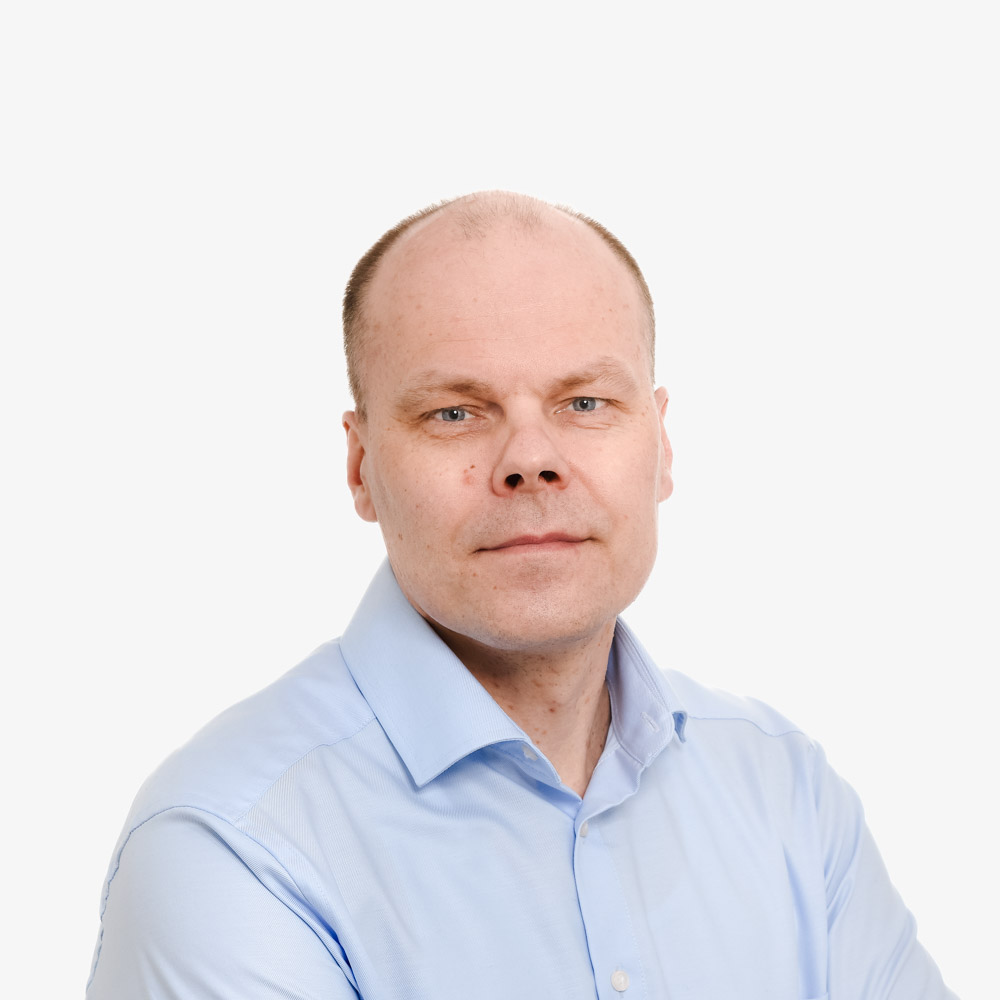
Sami Kinttu
CBDO, Project management
sami.kinttu@n1digital.com
+358 50 550 2773
We operate worldwide
Request a quote
Looking to bring your project to life? Whether you're in the initial planning stages or ready to dive into execution, our team is prepared to deliver customized, high-quality solutions tailored to your needs. Simply fill out the form below with your project details, and one of our experts will get in touch with a personalized quote. We’ll work closely with you to ensure every aspect of your vision is realized.