
Welcome to the new era
Digital twins
We create accurate and dynamic digital twins for process plants and manufacturing facilities. The digital twin provides valuable insights, enhances operations, and supports decision-making.
Digital twin of your asset
Why choose n1Digital?
Real-Time Monitoring
Continuously tracks performance data for instant operational insights.
Predictive Maintenance
Uses advanced analytics to preempt downtime and prolong asset life.
Virtual Commissioning
Validates systems digitally to reduce on-site risks and accelerate startups.
Accurate 3D Foundation
Leverages precise scans and models to create faithful digital replicas.
Digital assets, digital twins
What are digital twins?
Digital twins are transforming the process and manufacturing industry by enabling real-time monitoring, predictive maintenance, performance optimization, simulation, and lifecycle management. They gather sensor data to provide insights, predict failures, and optimize processes, reducing downtime and costs. Engineers use them for virtual commissioning, simulations, and continuous improvement without disrupting operations. Digital twins also enhance training, collaboration, and remote monitoring, making them invaluable for global enterprises. By spanning an asset’s entire lifecycle, they ensure consistent data and knowledge sharing. As technology advances, digital twins will drive greater innovation, efficiency, and competitiveness in the industry.
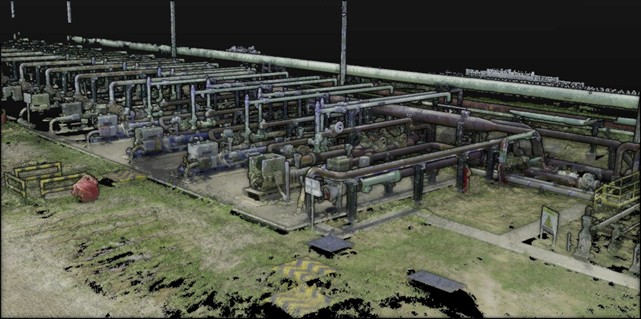
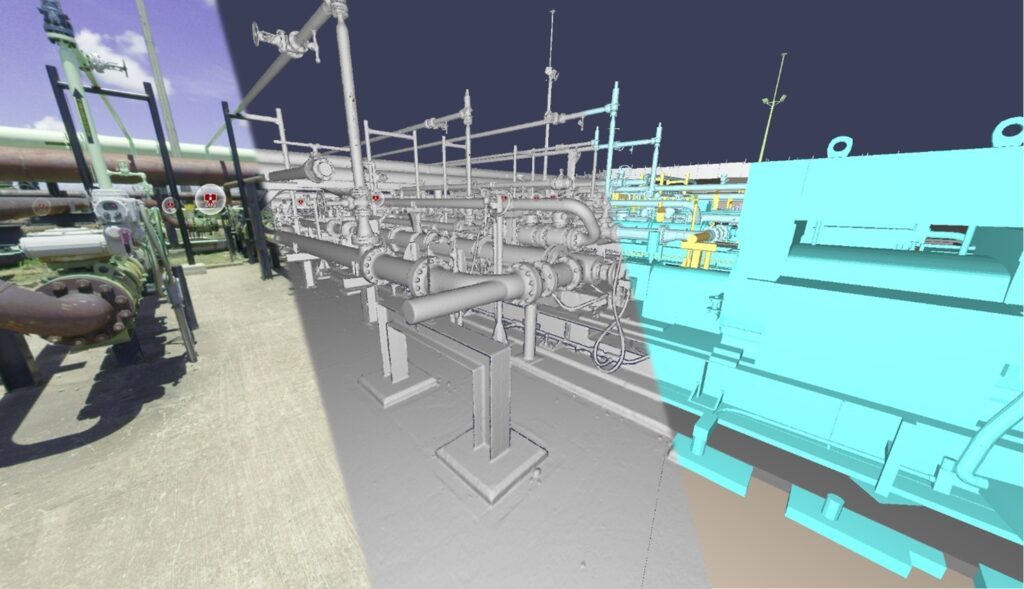
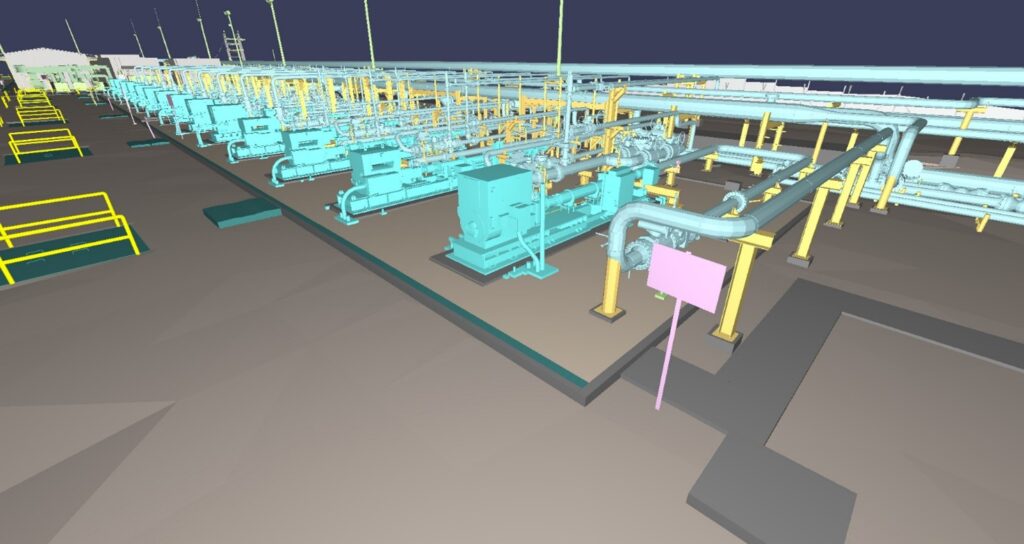
Here are some key aspects of digital twins in the process and manufacturing industry:
Real-Time Monitoring
Predictive Maintenance
Performance Optimization
Simulation and What-If Analysis
Virtual Commissioning
Training and Skill Development
Continuous Improvement
Collaboration and Data Sharing
Remote Monitoring and Control
Lifecycle Management
Reality capture and 3D models are the foundation of a digital twin
We utilize cutting-edge reality capture technologies, including 3D scanning, laser scanning, photogrammetry, LiDAR, and point cloud data, to capture physical assets with high precision. This data is processed into high-fidelity 3D models that digitally represent equipment and infrastructure. By combining this data with sensor inputs, IoT devices, and operational insights, detailed, real-time representations of industrial environments can be created.
Our as-built models ensure that the digital twin accurately reflects the facility’s current state, allowing for precise comparisons with real-world operations. At N1digital, we empower businesses with digital twins that drive efficiency, innovation, and smarter decision-making.
Reality Capture Technologies
High-Fidelity 3D Models
Data Integration
As-Built Models
Digital twins in the process and manufacturing industries are virtual replicas of physical assets that leverage real-time data, advanced analytics, and simulations to improve efficiency and decision-making. Reality capture technologies (e.g., laser scanning) create high-fidelity 3D models, forming the foundation of these digital twins. The approach enables predictive maintenance, virtual commissioning, performance optimization, and ongoing improvements throughout the asset’s entire lifecycle.
Want to learn more?
Get in touch!
Our experts would love to tell you more about, how we can help your company become more efficient.

Sami Kinttu
CBDO, Project management
sami.kinttu@n1digital.com
+358 50 550 2773
We operate worldwide
Request a quote
Looking to bring your project to life? Whether you're in the initial planning stages or ready to dive into execution, our team is prepared to deliver customized, high-quality solutions tailored to your needs. Simply fill out the form below with your project details, and one of our experts will get in touch with a personalized quote. We’ll work closely with you to ensure every aspect of your vision is realized.